





Wasps and Hornets in Baltimore
Know nesting habits and treatment options to keep outdoor spaces safe.
- Nests under eaves and soffits
- Paper nests in shrubs and trees
- Attracted to sweets, meats and trash
A Baltimorean’s Guide: Safely Navigating Wasps and Hornets
August in Baltimore is a time for cookouts, backyard games, and evenings on the porch. As summer peaks though, so does the activity of wasps and hornets. While these stinging insects are a vital part of our local ecosystem, they can quickly become a serious concern when their nests are built too close to homes, play areas, or business entrances.
For families with kids, pets, or anyone with a history of allergies, a single aggressive nest can make the whole yard feel off limits. That is where a clear plan makes all the difference. This guide from Queen “B” Pest Services walks you through how to recognize common wasps and hornets in Baltimore, what to do when you run into them, and when it is time to bring in a professional.
If you already know you have an active nest and want it dealt with quickly, you can skip ahead and schedule professional help through our Baltimore wasp control service and wasp removal page. Otherwise, read on to get a better handle on what is buzzing around your property.
The Usual Suspects: Identifying Wasps and Hornets in Baltimore
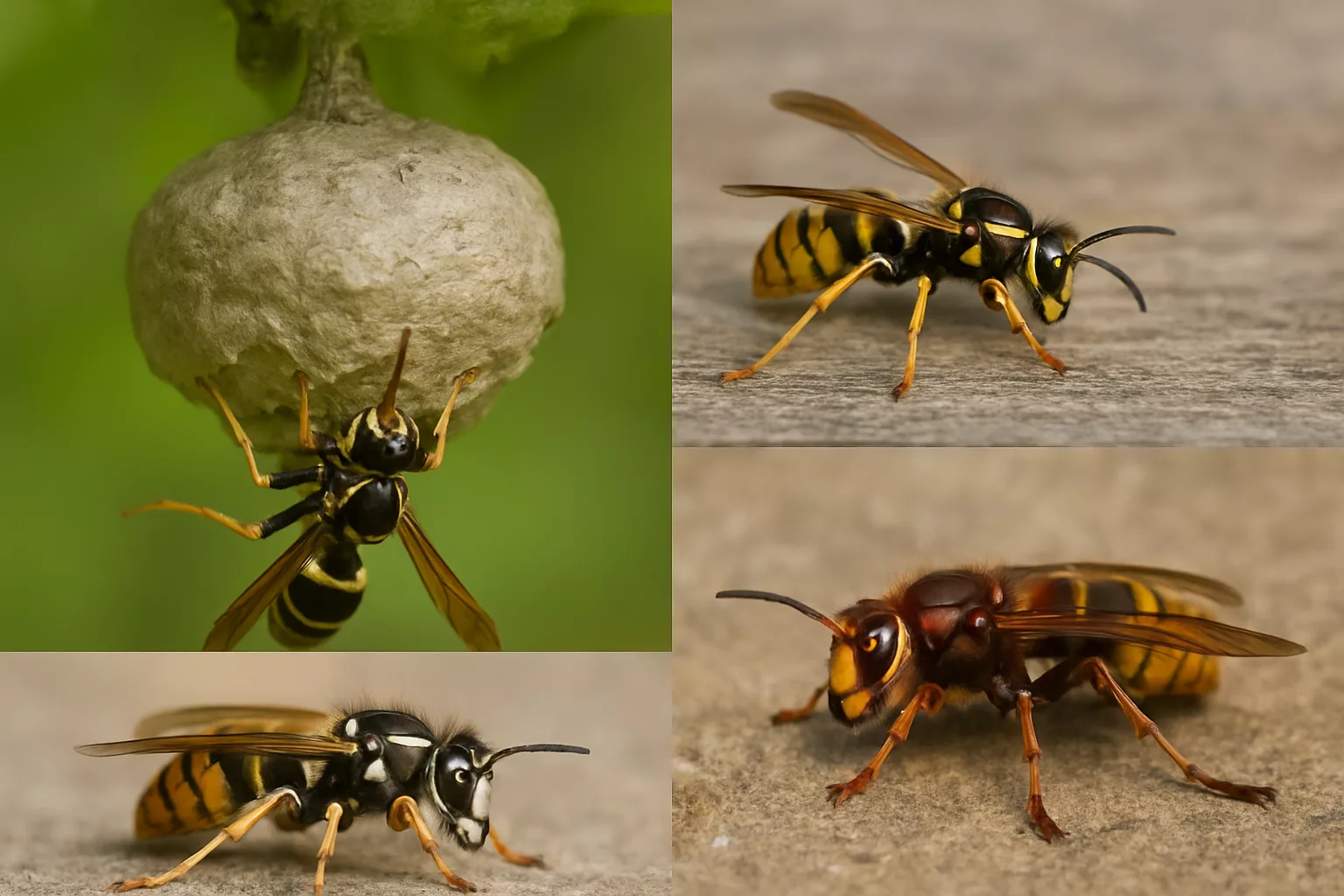
To know how to react, it helps to know what you are dealing with. Here are three of the most common stinging insects you will find in the Baltimore area:
- Paper wasps: Slender insects with long, dangling legs and a reddish-brown or brown-and-yellow body. Their nests look like an upside-down umbrella with exposed open cells. You will often see them tucked under the eaves of homes, on porch ceilings, or inside sheds and other outdoor structures.
- Yellowjackets: Compact, hairless-bodied wasps with bright yellow-and-black stripes. Yellowjackets are known for being more aggressive, especially when defending their nests. They often build nests underground, inside wall voids, or in hidden spaces around your home, such as under steps or in landscaping timbers.
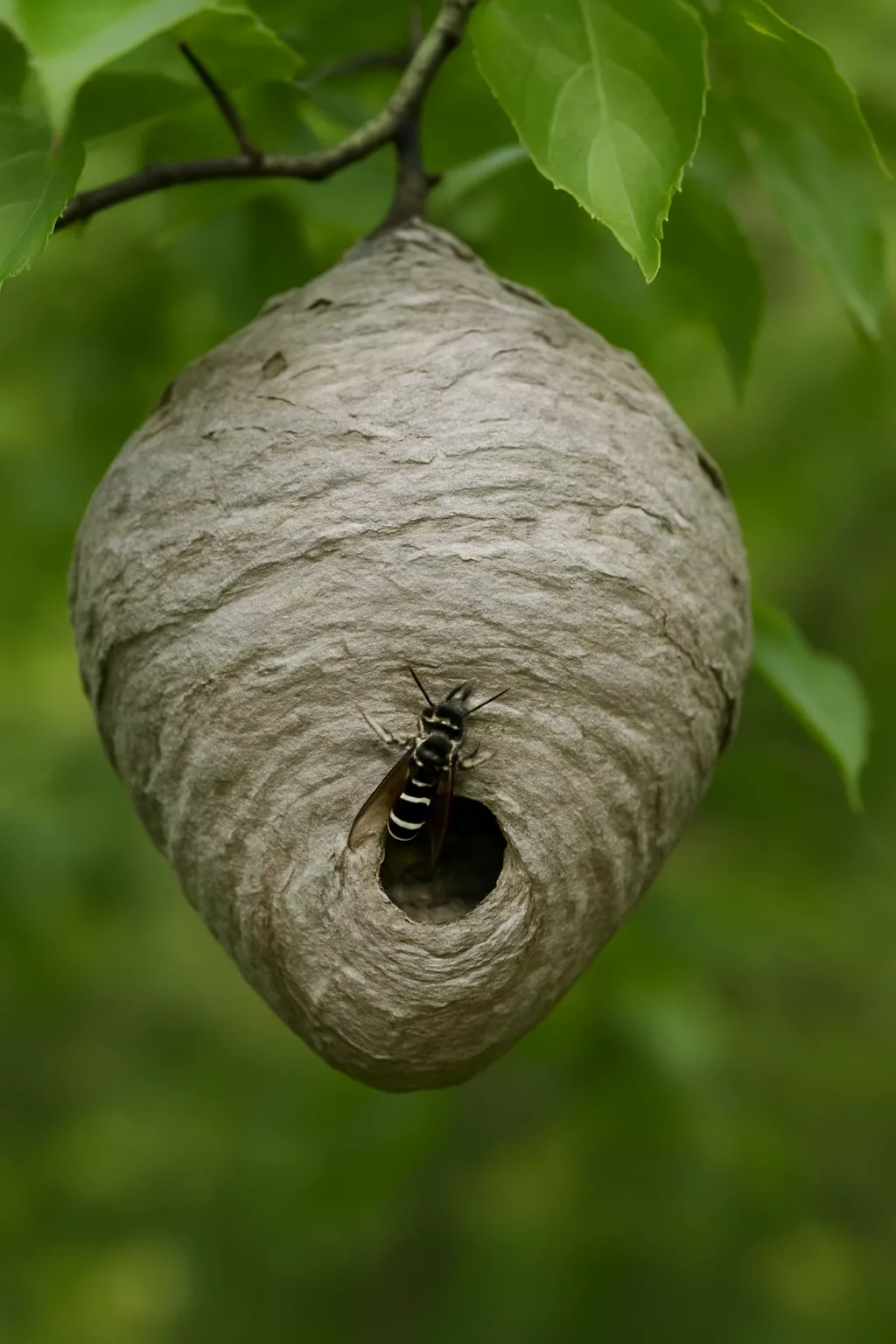
- Bald-faced hornets: Technically a type of yellowjacket, these large black-and-white wasps build impressive, football-shaped gray nests made from papery material. Their nests are usually found hanging from tree branches, shrubs, light poles, or attached high on the sides of buildings.
If you are not sure whether you are looking at a bee or a wasp, you are not alone. Honey bees and bumble bees behave very differently from aggressive wasps and hornets, and we want to protect beneficial pollinators whenever possible. Our article Bees and Wasps: What’s the Difference? offers simple side-by-side comparisons to help you tell them apart.
Why Wasps and Hornets Are So Active in Late Summer
Many Baltimore homeowners notice that wasps seem the most aggressive right when they want to enjoy the outdoors the most. That is not your imagination. Wasp and hornet colonies grow throughout the spring and early summer. By late summer and early fall, the nests are at their largest and have the most workers to feed and protect.
Those workers are constantly foraging for food — especially sugary drinks and protein-rich foods like meat. That is why you will see yellowjackets hovering around trash cans, picnic tables, and outdoor grills. At the same time, the colony is more defensive because it has more to protect. Any vibration, loud noise, or perceived threat near the nest can trigger a quick, aggressive response.
Baltimore’s warm, humid summers and tight-knit row home neighborhoods create plenty of perfect nesting spots: under porch roofs, inside soffits and wall voids, in shrubs and trees overhanging sidewalks, and even in the ground along fence lines. Understanding this pattern helps you stay one step ahead when planning outdoor activities late in the season.
Practical Prevention Tips for Your Yard and Home
You cannot keep every stinging insect out of your yard, but a few simple habits can make your property far less attractive to wasps and hornets:
- Stay on top of trash: Use outdoor garbage and recycling cans with tight-fitting lids. Clean sticky spills off the outside of bins, and avoid leaving trash bags sitting open on decks or in the yard.
- Protect food and drinks: When you are grilling or eating outside, keep food covered when it is not being served. Use lids or covers on sugary drinks so wasps are less tempted to investigate.
- Check the edges of your home: Take a quick look under eaves, around porch ceilings, and near light fixtures a few times each month during the summer. Small paper wasp nests are much easier to address early on.
- Inspect outbuildings and play equipment: Sheds, swing sets, playhouses, and mailboxes are common nesting spots. Make it a habit to scan these areas before kids begin playing.
- Seal gaps into wall voids: Carefully seal gaps around utility lines, vents, and siding to make it harder for yellowjackets to build hidden nests inside walls.
- Avoid sweet perfumes around known nests: Strong fragrances and brightly colored clothing can attract curious wasps. If you know there is activity nearby, keep things simple when you are working in that area.
- Do not DIY chemical treatments on large nests: Over-the-counter sprays can make an established nest very angry without actually solving the problem. For anything beyond a tiny, early-season paper wasp nest, it is safer to let a professional handle it.
Your Safety Questions Answered
Stinging insects naturally raise safety questions, especially when kids, pets, or guests are involved. Here are a few of the most common questions Baltimore homeowners ask us — and practical guidance to go with them.
What do I do if a wasp gets into my home?
The most important thing you can do is stay calm. Swatting wildly at a wasp or running around the room tends to make it more defensive. Instead, open a nearby window or door leading outside, turn off interior lights, and step away. Wasps are naturally drawn to light and open air and will often fly out on their own.
If it does not leave and you feel comfortable doing so, you can gently trap it under a cup or glass, slide a piece of stiff paper underneath, and release it outside. If anyone in the home has a known severe allergy to stings, move them to a different room while you handle the situation, or skip the DIY approach and call for help.
What happens if my child gets stung?
A typical wasp or hornet sting causes sharp, localized pain followed by redness, mild swelling, and itching at the site. For most people, this is a normal reaction. Wash the area gently with soap and water and apply a cold compress to help reduce pain and swelling.
However, it is important to watch closely for signs of a more serious allergic reaction, such as difficulty breathing, swelling of the face or throat, hives spreading over the body, dizziness, or fainting. If any of these symptoms appear, call 911 or seek emergency medical care immediately.
This article is for general information only and is not a substitute for professional medical advice. If you have any concerns after a sting, especially with children, older adults, or anyone with a history of allergies, contact a healthcare provider right away.
Is a wasp sting poisonous?
This is a very common question. A wasp sting is not considered “poisonous” — it is venomous. Venom is injected into the body through a sting or bite, while poison typically causes harm when it is swallowed, inhaled, or absorbed through the skin. For most people, wasp and hornet venom causes temporary pain, redness, and swelling.
That said, any venom can trigger a dangerous allergic reaction in susceptible individuals. If you are ever unsure about how serious a sting might be, it is always better to err on the side of caution and speak with a medical professional.
Do wasps reuse the same nest every year?
In our area, most wasp and hornet nests are only used for a single season. Workers and the old queen die off as cold weather arrives. Newly mated queens overwinter in protected hiding spots and then start fresh nests in the spring. They do not usually move back into last year’s nest, but they may choose a spot very close by if the conditions are still ideal.
Removing old nests after they are inactive and addressing the conditions that made the spot attractive in the first place can reduce the chances of new colonies forming in the same areas year after year.
What To Do If You Find a Nest
Finding a nest on your property can be unnerving, but a calm, structured response keeps everyone safer. Here are some simple do’s and don’ts:
- Do keep a safe distance and let family members know where the nest is located.
- Do keep pets and children away from the area until the nest has been evaluated.
- Do make a mental note of the size, height, and exact location so you can describe it clearly when you call for service.
- Do not bang on the wall, knock on the nest, or spray it with a hose. Sudden vibrations and water can trigger a swarm.
- Do not attempt to burn or smoke out a nest. This is extremely dangerous and often damages the structure of your home.
- Do not climb a ladder to reach a high nest unless you are trained and properly equipped. A sudden swarm can lead to falls and serious injuries.
A very small paper wasp nest in a remote corner of a property may not pose an immediate risk, but any nest near doors, decks, mailboxes, play areas, or high-traffic walkways should be evaluated by a professional as soon as possible.
When to Call the Pros at Queen “B” Pest Services
Some wasp and hornet encounters are just a brief inconvenience. Others are a real safety issue that call for professional help. As a general rule, it is time to call Queen “B” if:
- You see a steady stream of wasps or hornets entering and exiting a single spot, such as a hole in the ground, a gap in siding, or a crack near a window frame.
- The nest is larger than a golf ball and located anywhere close to where people live, walk, or play.
- You suspect a nest is inside a wall void, attic, or soffit based on traffic patterns or buzzing sounds.
- Someone in your household has a known allergy to stings.
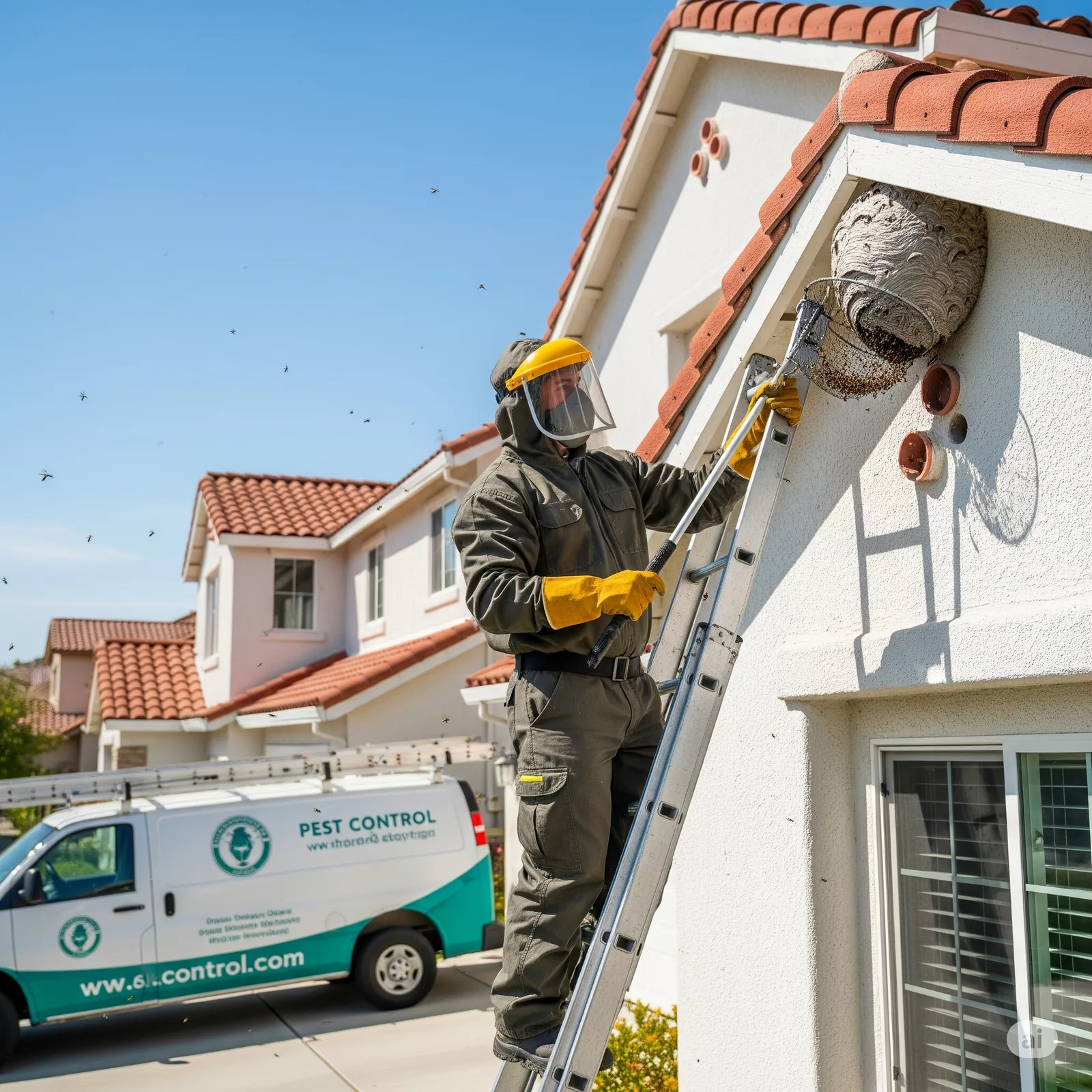
Queen “B” Pest Services has the protective gear, equipment, and experience to deal with wasp and hornet nests safely. Our technicians can inspect the nest location, choose the right treatment method, and remove or neutralize the nest while keeping your family and neighbors out of harm’s way.
Here is what a typical wasp or hornet service from Queen “B” looks like:
- A careful inspection of your home or business exterior to locate nests and identify the specific species involved.
- Selection of targeted products and techniques designed for that species and nesting site.
- Treatment and removal or neutralization of accessible nests, with extra attention to high-traffic areas.
- Recommendations to help reduce future nesting activity around your property.
Queen “B” serves homeowners and businesses throughout Baltimore City and the surrounding communities. Whether you are dealing with a nest under the eaves, yellowjackets in the ground, or hornets buzzing around your trees, our team is ready to help you take back your outdoor spaces.
Do not let wasps and hornets take over your summer. Call Queen “B” Pest Services today at (410) 989-1919 or request your free Baltimore pest control estimate online to schedule a wasp and hornet inspection and get a clear, safe plan for your property.
Identify common species
Paper wasps, yellowjackets and hornets differ in nest style and behavior—ID informs safe action.
- Paper wasps: open combs
- Yellowjackets: enclosed paper nests
- Hornets: large aerial paper nests
When to call a professional
Near doors or play areas, or when allergy risk exists, professional removal is safest.
- Protective equipment and methods
- Remove nest and reduce attractants
- Advice to prevent rebuilds
Sting safety tips
If stings occur, move indoors, clean the site, apply cold compresses, and seek care for severe reactions.
- Keep trash sealed
- Serve food with covers outdoors
- Avoid swatting near nests